English 🇺🇸
-

Solid Lubricant Dispersions vs Dry Powders: Which Form Factor for Your Application?
Specialty chemical supply chains tightened again in early 2026. A new lubricant additive blending facility inaugurated…
-
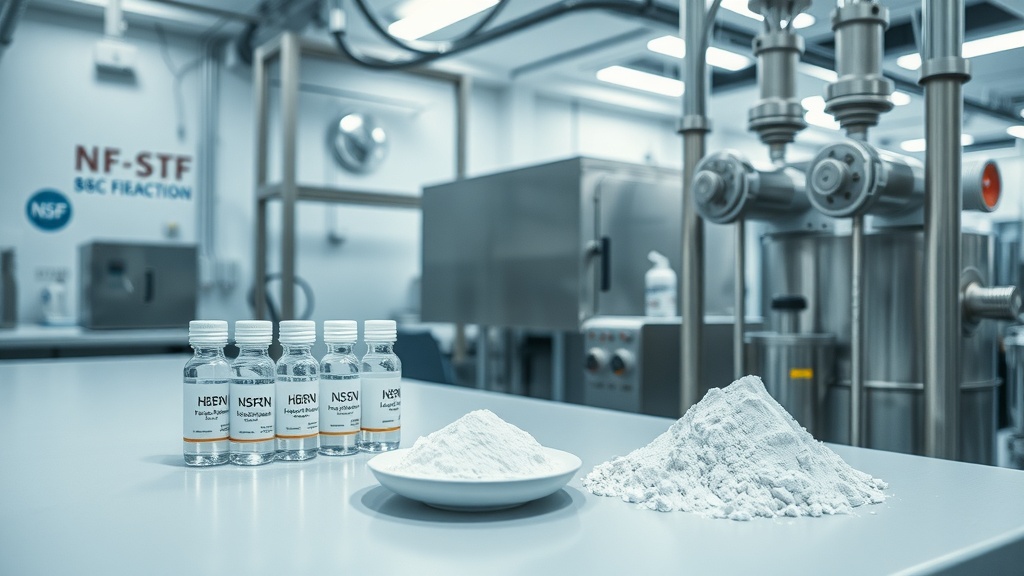
NSF HX1 Certification: What Lubricant Formulators Need to Know
The regulatory floor for food-processing lubricants is not getting lower. As global food safety frameworks converge…
-

Particle Size in Solid Lubricant Additives: How D50 Affects Performance
Particle Size in Solid Lubricant Additives: How D50 Affects Performance The particle size solid lubricant additive…
-

H1 vs H2 vs H3: Food-Grade Lubricant Classifications Explained
H1 vs H2 vs H3: Food-Grade Lubricant Classifications Explained If you formulate lubricants for food and…
-
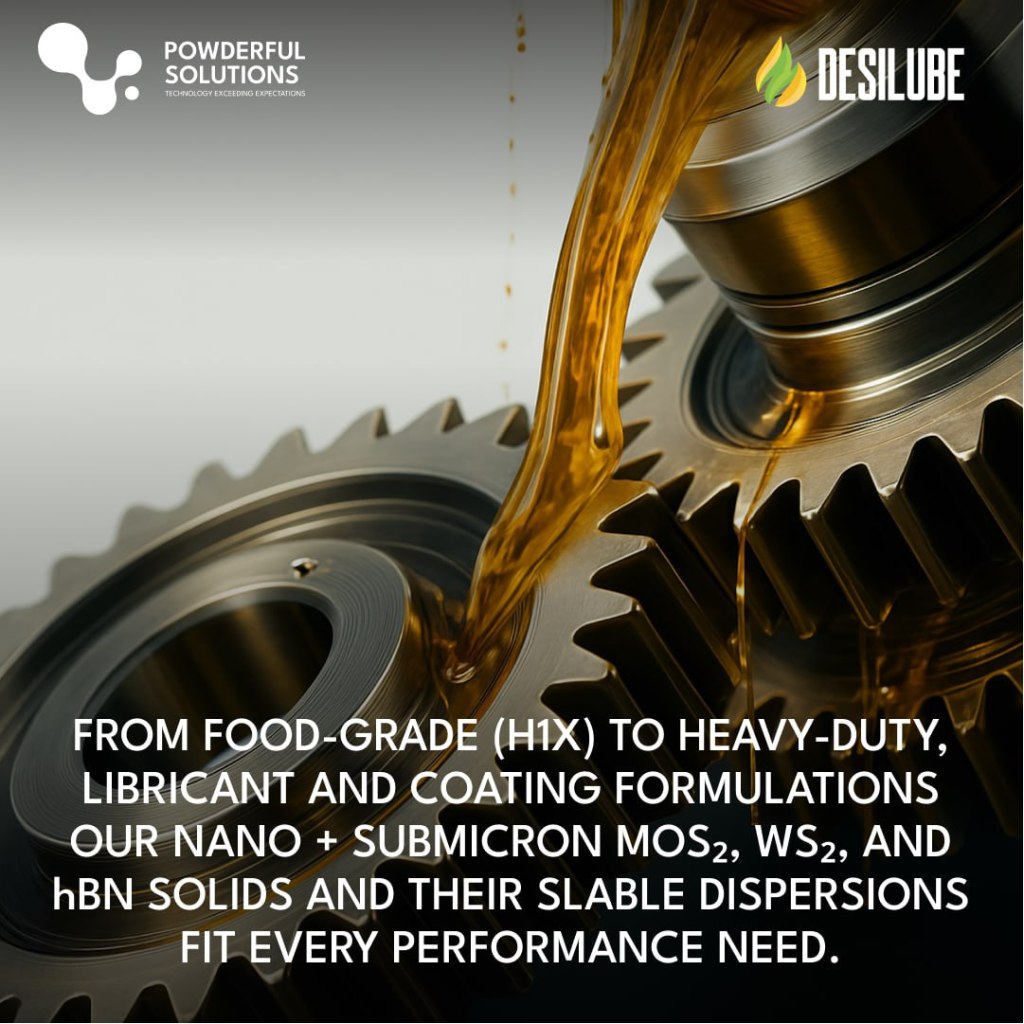
MoS2, WS2 & hBN for Dry Film Coatings: Applications and Formulation Guide
MoS2, WS2, and hBN for dry film lubricant coatings: types, particle sizes, treat rates, application guide,…
-
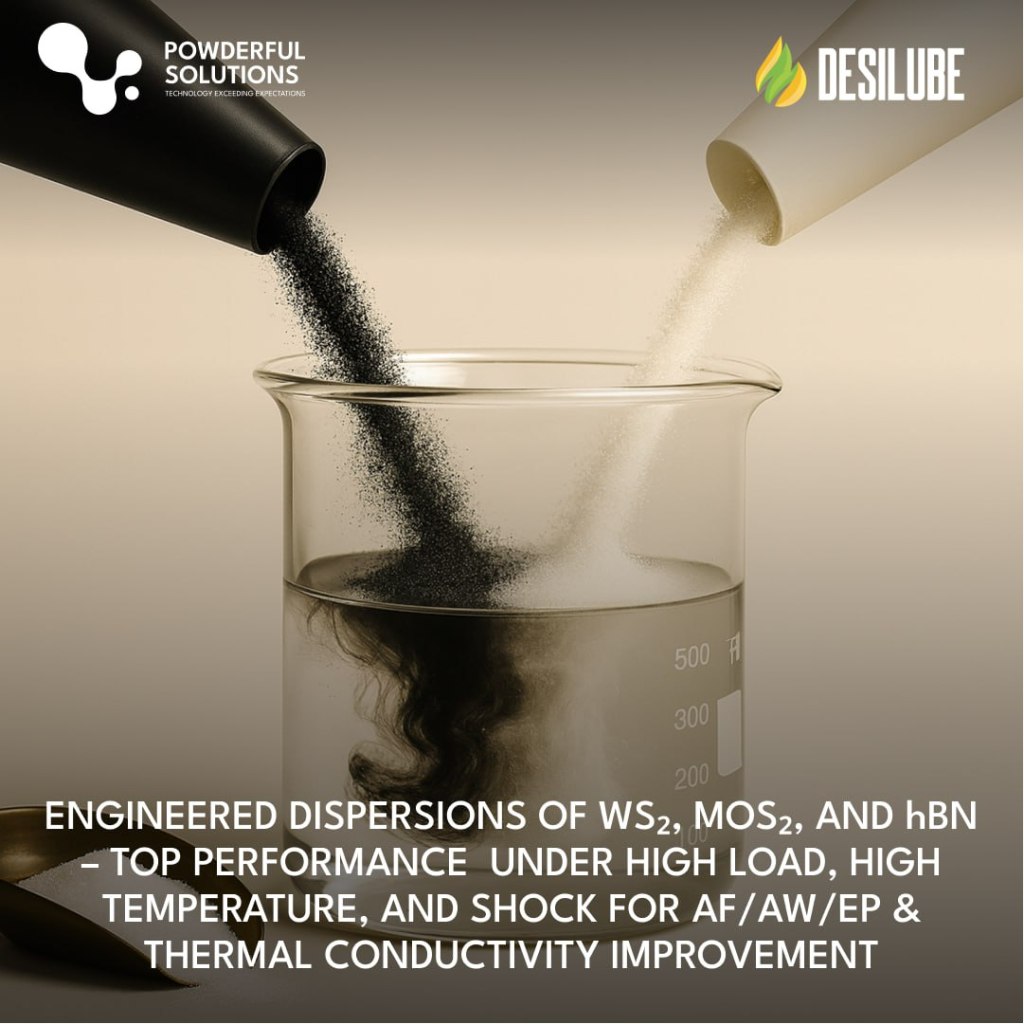
What Is the Difference Between MoS2, WS2, and hBN Solid Lubricants?
MoS2 vs WS2 vs hBN: key differences in temperature range, food-grade status, EP performance, color, and…
-

WS2 vs MoS2: Which Solid Lubricant Is Right for Your Application?
WS2 vs MoS2: a data-driven comparison for lubricant formulators. Friction coefficients, temperature limits, EP performance, cost,…
-
What Is MoS2 and Why Is It One of the Best Solid Lubricants?
MoS2 (molybdenum disulfide) is one of the best solid lubricants for industrial greases, oils, and coatings.…
-
MoS2 vs WS2 in High-Temperature Industrial Grease: A Formulator’s Decision Guide
Compare MoS2 and WS2 solid lubricant additives for high-temperature industrial grease. ASTM data, CoF benchmarks, and…
-
MoS2 vs WS2: Which Solid Lubricant Additive Wins in High-Temperature Grease?
MoS2 vs WS2 compared for high-temperature grease formulations. ASTM D2596 weld point, oxidation ceiling, dose rate,…

