Field studies are useful in lubricant marketing for one reason: they are harder to fake than lab headlines.
They are also easy to overread.
If a fleet manager or lubricant formulator sees a claim like up to 28.8% more engine hours or oil life up to 3x, the right response is not blind enthusiasm or automatic disbelief. The right response is to ask what kind of equipment was involved, how the comparison was run, and what part of the result is specific to that operating environment.
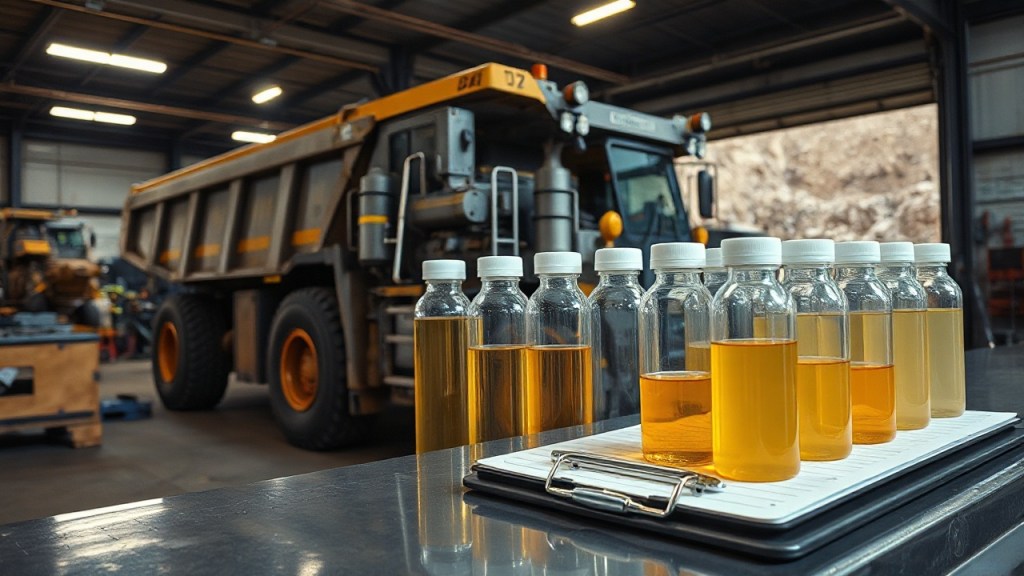
That is the right way to read Powderful’s internal mining case study covering haul trucks with large-displacement diesel engines using EPXtra™ W110 at 3% treat rate in engine oil. In the source summary, the field study reports up to 28.8% more engine hours, oil and service intervals increased from 250 to 750 hours, and up to 5.85% lower fuel consumption per engine-hour under the study conditions. Internal testing and field-study data actual results vary.
Those are strong results. They are also the kind of results that need to be interpreted carefully.
What the Case Study Actually Covers
The vault summary ties the study to mining haul trucks using Cummins KTA-50 engines across two operating sites. The comparison is described as matched control and test engines under the same service conditions, with used-oil analysis performed by site laboratories or UTC-linked testing.
That setup matters because it is much better than a vague testimonial. It suggests the comparison was not built on one operator’s memory or a single oil sample pulled out of context. It was structured around operating equipment, a control-versus-test setup, and repeated service intervals over meaningful time windows.
That is the minimum threshold for taking a fleet performance claim seriously.
Why Engine Hours Matter More Than a Generic Success Story
The most commercially important line in the source summary may be the simplest one: up to 28.8% more engine hours.
For a mining fleet, extra engine hours are not abstract. They connect directly to asset uptime, overhaul timing, maintenance planning, and production continuity. A result framed that way is more useful than a generic statement about “better protection” because it ties the additive story to equipment life and service economics.
At the same time, the phrase has to stay exactly where the source puts it: up to.
That wording is not decoration. It reflects the reality that field performance changes with duty cycle, driver behavior, base oil, contamination load, maintenance discipline, ambient conditions, and engine condition before treatment. A fleet that copies the additive into a different operating environment should expect a validation exercise, not a guaranteed replay.
Why the Oil-Service Interval Claim Is Worth Attention
The case study also reports that oil and service intervals increased from 250 hours to 750 hours, which is the basis for the public-safe phrase oil life up to 3x.
That matters because drain interval extension is one of the few performance claims customers will verify immediately. They will watch oil condition, wear metals, viscosity drift, and maintenance outcomes. If the interval does not hold, the claim collapses fast.
So when a study shows a shift from 250 to 750 hours under a matched field setup, it deserves attention. But it also deserves a disciplined rollout path:
- confirm the engine family and duty cycle are comparable,
- compare the current base oil and additive package against the trial setup,
- keep used-oil analysis in the loop from the first extended interval onward,
- extend intervals in stages rather than assuming the final number on day one.
That is how a useful field-study result becomes a fleet program instead of a maintenance gamble.
The Fuel Number Is Strong, but It Still Needs the Same Discipline
The source summary also supports the public phrasing up to 5.85% lower fuel consumption.
Fuel claims attract the most scrutiny because they are visible to finance, operations, and drivers at the same time. They are also affected by load profile, route, idle time, traffic, weather, and measurement method.
That does not make the result unimportant. It means the right question is whether the study setup was strong enough to justify a controlled replication in your own fleet.
For a serious buyer, that is the real use of a field-study fuel number. It is not a promise. It is a reason to run a disciplined pilot.
What This Case Study Can Prove
Used correctly, the mining haul-truck study supports a clear public conclusion:
In a real heavy-duty mining application, with matched control and test engines, EPXtra W110 at 3% treat rate was associated with meaningful improvements in engine hours, service interval length, and fuel consumption under the reported study conditions.
That is commercially relevant.
It gives buyers more than a bench-top screening result. It gives them an example of the additive being evaluated under sustained field load, over long operating windows, in equipment that matters.
What It Cannot Prove by Itself
The same study does not prove that every diesel fleet will see the same outcome. It does not prove the same magnitude of gain in on-road trucking, construction, marine, or stationary power. It does not prove universal compatibility with every oil package. It does not eliminate the need for oil analysis or maintenance review.
In other words, the study is a strong piece of evidence.
It is not universal law.
That distinction is what keeps technical publishing credible.
The Practical Takeaway for Fleets and Formulators
The mining field study is useful because it moves the conversation from vague additive language to measurable operating outcomes: up to 28.8% more engine hours, oil life up to 3x, and up to 5.85% lower fuel consumption in a real heavy-duty setting.
The disciplined takeaway is not “assume the same numbers.”
It is “use this as a reason to structure the right pilot.”
For fleets, that means selecting comparable units, locking the oil-analysis plan, and tracking engine-hour, service, and fuel data against a real control group. For formulators and distributors, it means asking for the field-study detail, confirming the additive treat rate and oil context, and then testing inside the actual operating envelope that matters to the customer.
If that is the stage you are at, Powderful Solutions can support the next step with the field-study context, sample planning, and a focused technical discussion before rollout.
Performance figures are based on internal laboratory testing and field studies under specific conditions. Actual results vary depending on application, operating conditions, equipment age, base oil and additive package, ambient environment, and formulation. Figures shown are not a guarantee of savings or performance any individual user will achieve. Test before scaling.


Leave a Reply