When a grease data sheet quotes a “high weld point” or a “low wear scar,” the formulator’s first job is not to admire the number. It is to ask: which test, at what treat rate, in what base, against what reference?
Three ASTM methods dominate this conversation: ASTM D2596, ASTM D2266, and ASTM D4172. Each answers a different formulation question. Mixing them up is one of the fastest ways to compare the wrong things and overestimate what a test result means in the real world.
This guide explains what each method measures, when the result is useful, when it is not, and how to read a test report without being misled by treat-rate gymnastics.
What ASTM D2596 Actually Tells You
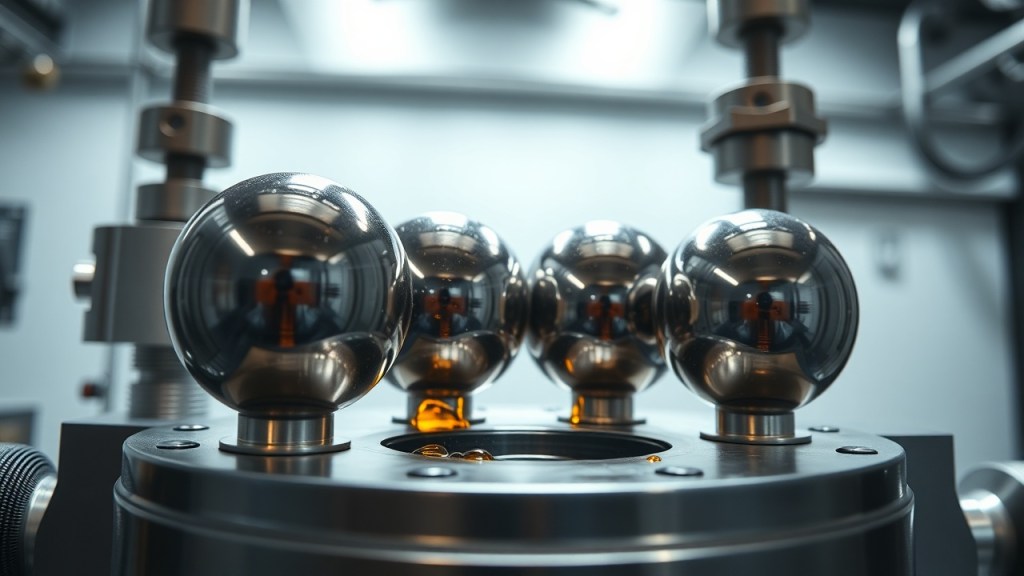
ASTM D2596 is the four-ball extreme-pressure test for lubricating greases. A rotating top ball is loaded against three stationary balls in the test grease. Load is increased stepwise until welding occurs. The method reports values such as load-wear index and weld point, which are used to compare EP behavior under the defined test conditions.
What it tells you:
- The upper-limit EP behavior of a grease under short-duration, high-load contact
- How robust the formulation appears under shock-load style conditions
- A relative ranking between grease formulations when they are tested under the same method and comparable conditions
What it does not tell you:
- How the grease behaves at moderate load over a long duty cycle
- How it handles oxidation, oil separation, water exposure, or thermal aging
- Whether it will succeed in a specific bearing, gear, joint, or sliding contact without application validation
D2596 is a ceiling test. It is useful, but it is not a complete performance model. Two greases with similar weld points can behave differently at ordinary operating loads, especially if their thickeners, base oils, or additive packages differ.
Lab and field results — actual user results vary by application, contact geometry, and operating conditions.
What ASTM D2266 Actually Tells You
ASTM D2266 is the four-ball wear test for lubricating greases. Instead of pushing the formulation toward weld failure, the test runs under fixed wear-test conditions and reports the wear scar diameter on the stationary balls.
What it tells you:
- How the grease performs in a sustained anti-wear screen
- How effectively the boundary film limits metal-to-metal contact under the defined conditions
- Whether one formulation shows lower wear than another when the same method, base, and treat-rate comparison are used
What it does not tell you:
- The shock-load EP ceiling of the formulation
- Wear behavior across every load, speed, temperature, or contamination condition
- Real-world bearing life without additional application-specific testing
A grease can produce a strong D2266 result and a less impressive D2596 result, or the reverse. That is not necessarily a contradiction. The two methods probe different lubrication regimes.
What ASTM D4172 Actually Tells You
ASTM D4172 is a four-ball wear test for liquid lubricants such as base oils, finished oils, hydraulic fluids, and other fluid lubricant systems. It is often discussed near grease testing because the geometry is familiar and the output is also a wear scar diameter. But it is not a grease test.
That distinction matters. A D4172 result may be useful when an additive supplier is showing how a chemistry performs in a fluid base oil before that chemistry is incorporated into a grease. It can help screen additive behavior. It should not be directly compared against a D2266 result on a finished grease as if the two numbers came from the same test environment.
When you see D4172 data in a grease-related discussion, ask what was actually tested:
- A neat additive in a base oil?
- A finished fluid lubricant?
- A grease-related intermediate?
- A finished grease, where D2266 would usually be the more appropriate wear method?
The answer changes what the number means.
The Treat-Rate Trap
Treat rate is where many EP and wear comparisons become misleading.
If one supplier reports a strong weld point at a low treat rate and another reports a lower weld point at a much higher treat rate, the headline does not tell the whole story. The better formulation choice depends on what you are optimizing:
- Cost per unit of finished grease
- Maximum EP ceiling
- Compatibility with the thickener system
- Impact on consistency, oil bleed, color, and pumpability
- Whether the same result holds in the customer’s own base grease
The honest comparison is treat-rate normalized: test the candidate additives in the same base grease, at matched loadings, on the same method, against the incumbent formulation. Until that data exists, the headline number is a useful screening clue — not a final formulation answer.
How to Read a Vendor Test Report Honestly
Before trusting an EP or wear claim, ask five questions:
- Which method? D2596, D2266, D4172, or another method entirely?
- What treat rate? Weight percent in the finished grease or fluid, not just the additive concentrate.
- What base? Mineral oil, PAO, ester, polyglycol, lithium complex, calcium sulfonate, polyurea — base chemistry changes results.
- What reference baseline? A number is most useful when the incumbent or control was tested under the same method and comparable conditions.
- Is the report available? A real report should show enough method detail for a formulator to judge whether the comparison is fair.
A data sheet that gives a number without these answers is a marketing claim, not a complete technical comparison.
Where Solid Lubricant Additives Fit
Submicron solid lubricant additives — including WS₂, MoS₂, and hBN platelet systems — are typically evaluated because they can contribute to boundary-film behavior in EP and anti-wear regimes. Their value is not only chemistry; it is whether the material can be dispersed, dosed, blended, and validated in the actual formulation.
In grease development, their effect may appear in:
- D2596 weld point or load-wear index, where the goal is higher EP capacity under the method conditions
- D2266 wear scar diameter, where the goal is lower measured wear under a sustained moderate-load screen
- Customer-specific tests such as Timken, FZG, pumpability, water washout, corrosion, and storage stability, depending on the application
Choosing the right format — dry powder, oil dispersion, or grease concentrate — depends on the application, base grease compatibility, and the test number the customer specification actually requires.
The Practical Takeaway
D2596 tells you about EP ceiling. D2266 tells you about grease wear behavior under a defined four-ball wear screen. D4172 tells you about fluid lubricant wear behavior, not finished grease performance.
Treat rate, base chemistry, and reference baseline turn raw test numbers into useful formulation information. Ask the five questions every time.
If you are evaluating a solid lubricant grease additive against a published EP or wear claim, the cleanest path is a side-by-side comparison in your own base grease at matched treat rates, run under the same method against your incumbent. Powderful Solutions can supply samples and help outline a practical test matrix for that comparison.
Disclaimer
Performance figures are based on internal laboratory testing and field studies under specific conditions. Actual results vary depending on application, operating conditions, equipment age, base oil and additive package, ambient environment, and formulation. Figures shown are not a guarantee of savings or performance any individual user will achieve. Test before scaling.


Leave a Reply