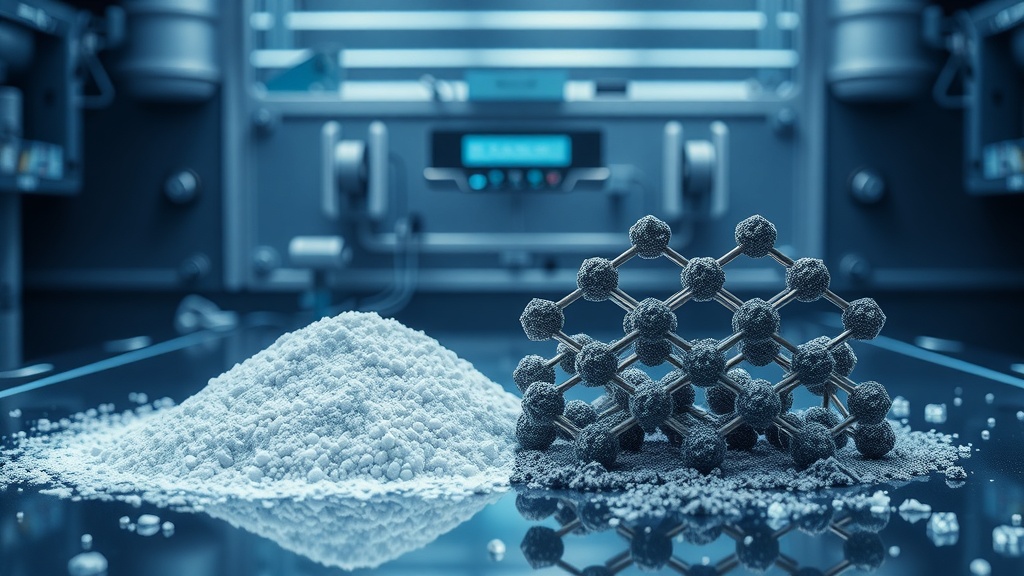
In early 2026, HydroGraph confirmed UK REACH and EU REACH registration for its graphene materials — a milestone that lubricant formulators have been waiting on for years. The regulatory clearance arrived alongside peer-reviewed data showing graphene-coated particles delivering 85.7% wear rate reductions in lithium grease testing. The graphene vs hBN solid lubricant comparison is no longer a theoretical exercise. Both materials are commercially available, both have credible performance data, and both are competing for the same position in next-generation grease and oil formulations. But the comparison is more nuanced than friction coefficients alone — and for a formulation chemist who has watched more than one “revolutionary” additive fail at the regulatory or scale-up stage, the full picture matters.
Performance Fundamentals: What the Data Actually Shows
Hexagonal boron nitride (hBN) and graphene share a structural analogy — both are two-dimensional layered materials with sp2 hybridized bonds that enable low-shear sliding between basal planes. That is where the similarity ends in practical application.
Graphene achieves friction coefficients approaching 0.01 under controlled laboratory conditions — the superlubric regime — but these results are almost exclusively obtained in dry, inert-atmosphere testing on single-crystal substrates. In a grease matrix with moisture, oxidation potential, and real surface roughness, graphene’s tribological performance drops materially. The graphene literature from 2025–2026 consistently shows excellent friction reduction in idealized conditions but wide performance variance in application-relevant environments.
hBN’s lubrication mechanism is different and, for bulk applications, more predictable. The layered hexagonal lattice shears preferentially along the basal plane regardless of ambient humidity — unlike graphite, which depends on adsorbed water vapor for its lubricity and fails in dry or vacuum environments. hBN works in both conditions. At 1% loading in a base grease, hBN contributes measurable thermal conductivity improvement (0.12 to 0.24 W/mK), which matters for high-speed bearings where heat management is as important as friction reduction.
For extreme-pressure performance, neither graphene nor hBN matches the EP film strength of sulfur-phosphorus or tungsten disulfide chemistry at high loads. WS2, for example, delivers an 800 kgf weld point per ASTM D2596 at 2.5% loading in the Torvix W720 grease additive system — performance no 2D carbon material approaches in four-ball weld testing.
Food-Grade Applications: hBN Wins Unambiguously
This is where the graphene vs hBN comparison stops being a close call. For any lubrication point in a food processing facility — conveyor bearings, mixer gearboxes, can-seamers, filling heads — the regulatory framework is binary: the additive either meets NSF HX1 requirements or it does not.
hBN is NSF HX1 eligible and PFAS-free. It passes toxicological review under NSF’s HX1 protocols because it is chemically inert, non-migratory at use concentrations, and has a well-characterized safety profile. Solidex B025 from Powderful Solutions, used at 0.25–0.5% in food-grade grease formulations, combines this compliance advantage with the thermal stability that PTFE-based alternatives can no longer credibly claim — hBN is stable above 900°C versus PTFE’s 260°C decomposition threshold.
Graphene, despite its EU REACH registration progress, has no current NSF HX1 approved food-grade grease formulation on the market. The contamination concern is also non-trivial: graphene’s dark coloration means any migration to a food product would be visually detectable and commercially catastrophic. For a food plant quality manager, that alone is a disqualifying factor.
When Solidex B025 hBN is blended with Desilube 88 or Desilube 98F from Desilube Inc. — NSF HX1 approved sulfur-phosphorus solid lubricant additives at 0.5–2.5% treat rate — the result is a PTFE-free, high-EP, fully NSF HX1 compliant food-grade grease system. That is a formulation you can defend in an audit, not just a laboratory result.
Industrial High-Load Applications: A More Honest Assessment
Outside food contact environments, the comparison is less one-sided — but graphene’s production limitations impose a practical ceiling that the market tends to understate.
The global graphene market is transitioning from research-phase to commercial-phase production in 2026, but “commercial” still means limited batch sizes, significant price premiums over competing solid lubricants, and ongoing batch-to-batch consistency challenges. A grease formulator switching from MoS2 or WS2 to graphene cannot assume supply chain stability or consistent particle size distribution across lots — both are critical to reproducible tribological performance.
hBN production is mature. Submicron hBN particle sizes are reliably achievable at industrial scale, and platelet morphology — the key variable for lamellar lubrication efficiency — is controllable. For high-temperature industrial applications above 500°C where MoS2 begins to oxidize, hBN’s stability above 900°C makes it the technically correct choice, not just the convenient one.
For extreme-pressure industrial applications where load matters more than temperature ceiling, WS2-based systems remain the performance benchmark. WS2 offers a lower coefficient of friction than MoS2, higher thermal stability, and better oxidation resistance — the EPXtra W110 WS2 engine oil additive and Torvix W720 WS2 grease additive from Powderful Solutions are purpose-engineered for these conditions, each optimized for their respective application (Torvix W720 is grease-only; EPXtra W110 is formulated for engine oil environments).
Graphene’s strongest case is in thin-film coatings and low-load, high-speed applications where its extremely low shear strength is fully expressed. In bulk additive use in greases and oils at realistic industrial concentrations, the performance delta versus established solid lubricants does not justify the supply chain risk or cost premium — at least not in 2026.
Thermal Stability and Oxidation Resistance: The Long-Term Picture
Thermal stability is where hBN’s structural advantage is most durable. The B-N bond dissociation energy is among the highest of any solid lubricant — hBN does not oxidize appreciably below 900°C in air, and it does not react with most industrial chemicals. This makes it suitable for continuous-casting lubricants, high-temperature chain oils, and any application where the grease sees cyclic thermal excursions that would degrade organic additives.
Graphene’s thermal oxidation in air begins around 300–400°C, depending on defect density and particle size. Multilayer graphene performs better than single-layer material in oxidative environments, but neither approaches hBN’s upper service temperature. For formulators designing lubricants for steel mill equipment, glass mold release agents, or sintering processes, hBN is not competing with graphene — it is in a different performance bracket entirely.
Oxidation resistance also affects long-term grease stability. hBN is chemically passive in most base oil and thickener systems, while functionalized graphene grades introduce compatibility variables with antioxidants and EP packages that require screening.
Choosing the Right Solid Lubricant for Your Formulation
The graphene vs hBN comparison resolves differently depending on application:
- Food-grade applications: hBN (Solidex B025) is the only viable choice — NSF HX1 eligible, PFAS-free, thermally stable, and visually benign.
- High-temperature industrial greases (>400°C): hBN’s stability makes it the correct technical choice.
- Extreme-pressure industrial applications: WS2 (Torvix W720 for greases, EPXtra W110 for engine oils) outperforms both graphene and hBN on EP film strength.
- Low-load, controlled-environment thin-film coatings: Graphene’s superlubric potential is real, but scale-up and consistency remain unresolved.
Graphene will eventually find its industrial lubricant niche — the REACH registrations and 2026 academic data confirm the trajectory. But trajectory is not the same as readiness, and supply chain maturity matters as much as friction coefficients.
For hBN formulation support, the Solidex B025 hBN additive from Powderful Solutions and the complementary NSF HX1 food-grade lubricant additive portfolio at Desilube Inc. represent a validated, commercially available system — not a research roadmap.
*Reference standards: NSF International HX1 category, EU REACH Regulation (EC) No 1907/2006, ASTM D2596 (four-ball EP test), IDTechEx Graphene & 2D Materials 2026–2036 market analysis.*


Leave a Reply