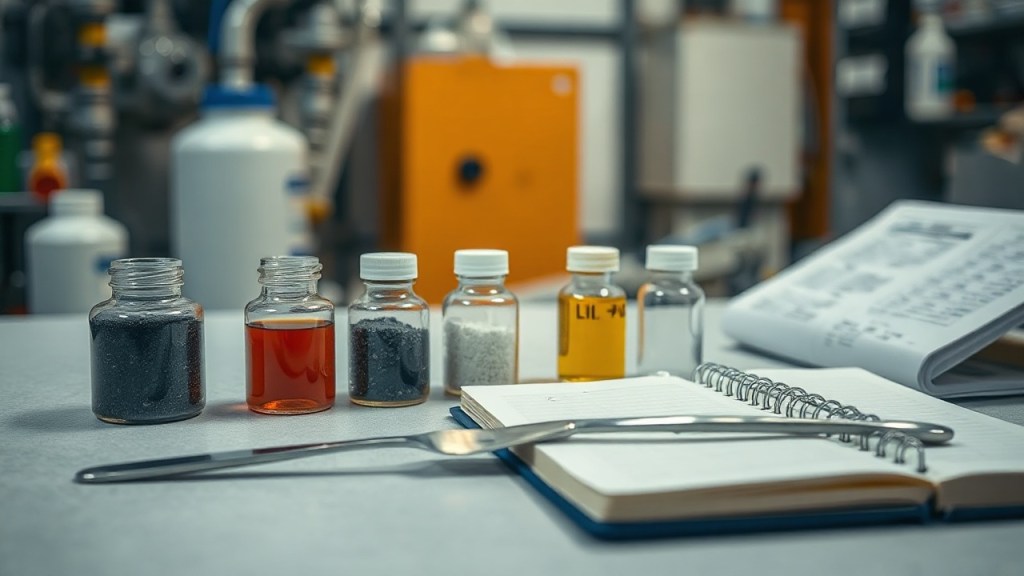
The demand for PFAS-free lubricant alternatives has reached a regulatory inflection point in 2026. The European Chemicals Agency (ECHA) is advancing a universal PFAS restriction under REACH Annex XVII, targeting per- and polyfluoroalkyl substances across industrial sectors—lubricants included. PTFE (polytetrafluoroethylene), long the default solid lubricant additive in greases and oils, carries a C-F backbone that places it squarely in the PFAS definition. Formulators operating in EU, UK, and increasingly North American markets face a clear choice: transition now or face product reformulation under regulatory pressure.
This guide examines the technically credible PFAS-free lubricant alternatives available today, with performance data and formulation guidance for engineers who need results, not marketing claims.
Why PTFE in Lubricants Is a PFAS Problem
PTFE’s chemistry is built on carbon-fluorine bonds—the defining structural element of PFAS compounds. While PTFE is often positioned as “stable” and “safe,” OECD’s 2021 PFAS definition and the EU’s 2023 Universal PFAS Restriction Proposal explicitly include polymeric fluorinated compounds. PTFE decomposes at 260°C, releasing perfluorooctanoic acid (PFOA) precursors and toxic fluorinated gases—a documented hazard in high-temperature bearing applications.
Beyond health and regulatory risk, PTFE’s performance ceiling is genuinely limiting. Under extreme pressure (EP) conditions exceeding 200 kgf on ASTM D2596, PTFE provides negligible weld-point performance. At temperatures above 260°C, it is simply gone. Lamellar solid lubricants outperform it on every relevant tribological axis.
WS2 (Tungsten Disulfide): The Highest-Performance PFAS-Free Alternative
Tungsten disulfide (WS2) is the top-performing PFAS-free lubricant alternative for demanding industrial applications. Its layered hexagonal crystal structure provides lamellar lubrication—platelets shear under load, creating a low-friction transfer film on metal surfaces. Performance data:
- Coefficient of friction: 0.03–0.07—comparable to PTFE, without the fluorine
- Thermal stability: functional above 450°C in inert atmospheres, 350°C in air
- EP performance: Torvix W720 WS2 grease additive delivers 800 kgf weld point per ASTM D2596 at 2.5%—a figure PTFE-based systems cannot approach
- Zero fluorine: no PFAS classification under OECD or EU REACH criteria
For engine oil applications, EPXtra W110 WS2 oil additive is the correct product. Torvix W720 is formulated exclusively for grease systems—do not substitute.
MoS2 (Molybdenum Disulfide): Proven, Cost-Effective PFAS-Free Performance
MoS2 has the longest track record of any lamellar solid lubricant, with decades of OEM approvals and ASTM validation behind it. Like WS2, it operates through lamellar crystal shear, providing robust boundary lubrication where fluid film breaks down.
Thermal stability: ~350°C in air—significantly above PTFE’s decomposition point. Primary limitation versus WS2 is susceptibility to oxidation at very high temperatures and marginally higher CoF in humid environments. In enclosed bearing systems and greases where moisture is controlled, MoS2 performs at the highest level.
Submicron MoS2 dispersions from Powderful Solutions are engineered for consistent particle size distribution, critical for stable incorporation into polyurea, lithium complex, and calcium sulfonate greases.
hBN (Hexagonal Boron Nitride): White, Inert, PFAS-Free, NSF HX1 Compatible
Hexagonal boron nitride is the standout PFAS-free lubricant alternative for food-grade and high-temperature applications where MoS2 and WS2 are unsuitable due to color or chemistry constraints. hBN is white, chemically inert, non-reactive with water, acids, or alkaline cleaning agents, and thermally stable above 900°C—over three times the temperature ceiling of PTFE.
For food-grade grease formulation, the validated PFAS-free stack is: Desilube 88 or Desilube 98F NSF HX1-certified S-P additives at 0.5–2.5% combined with Solidex B025 hBN from Powderful Solutions at 0.25–0.5%. This combination delivers high EP, low friction, and complete PFAS-free compliance—without any PTFE in the formulation. NSF HX1 listing is maintained.
How to Choose: Performance vs. Application Requirements
Published tribology data from Tribology International confirms that WS2 and MoS2 at submicron particle sizes outperform PTFE in boundary lubrication at loads above 200 kgf. The selection framework is:
- High EP, high temperature, dark color acceptable: WS2 (Torvix W720 for grease, EPXtra W110 for oil)
- Cost-optimized EP, standard temperature: MoS2 submicron dispersion
- Food-grade, white color, extreme temperature, electrical insulation: Solidex B025 hBN + Desilube 88/98F
- Biodegradable base oil: Lubricore B250/B260 Group V ester (OECD 301B/D) with any of the above solid additives
Compliance testing should follow ASTM D2266 (four-ball wear), ASTM D2596 (weld point), and ASTM D2783 (load-carrying) to document performance in your formulation matrix.
Transition Timeline and Action Steps
The ECHA PFAS restriction timeline makes 2026 the year to complete reformulation, not plan it. Key steps:
- Audit your current formulations for PTFE content and total PFAS load
- Identify direct substitution candidates (WS2, MoS2, hBN based on application)
- Request technical data sheets and performance benchmarks from Powderful Solutions and Desilube
- Run comparative four-ball and weld-point testing against your current PTFE-based specification
- Update SDS, product labels, and regulatory compliance documentation
Powderful Solutions and Desilube supply the complete PFAS-free solid lubricant toolkit. Request formulation samples and data sheets to begin your transition immediately.


Leave a Reply