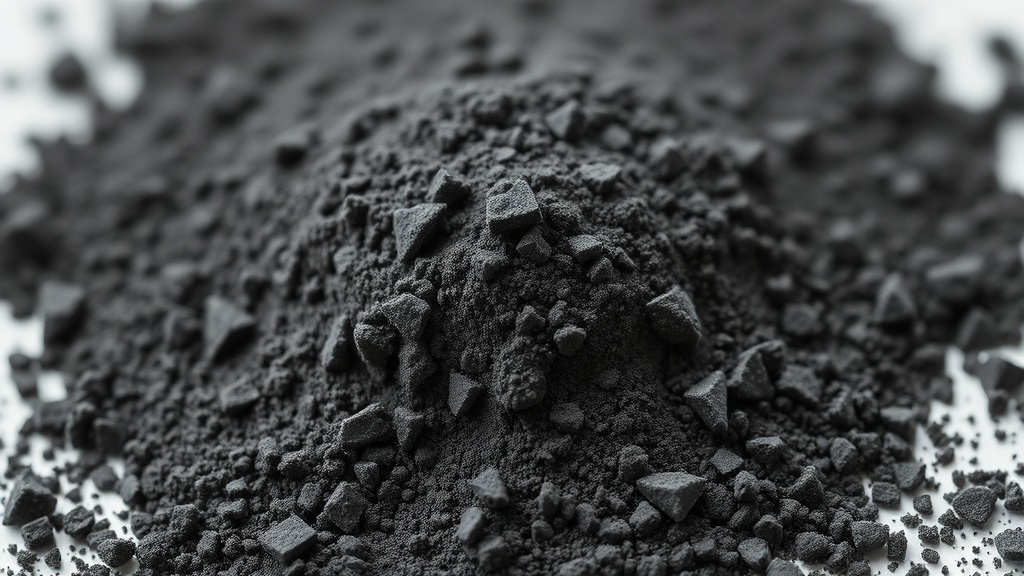
Tungsten disulfide (WS2) is redefining performance benchmarks for lubricant formulators worldwide. With a coefficient of friction as low as 0.03 under boundary lubrication conditions and thermal stability above 450°C in non-oxidizing environments, WS2 delivers capabilities that conventional MoS2 simply cannot match. This guide explains the chemistry, the data, and how to integrate this submicron solid additive effectively into your formulations.
Why WS2 Outperforms MoS2 in Modern Lubricant Formulations
MoS2 has dominated the solid additive market for decades, but it has a critical limitation: above 350°C it oxidizes to form molybdenum trioxide (MoO₃), an abrasive compound that accelerates wear instead of reducing it. WS2 maintains its hexagonal laminar structure above 450°C, making it the correct choice for high-temperature applications including turbine bearings, compressors, and industrial transmission gears.
WS2 also shows superior oxidation resistance in humid conditions and is chemically inert against most base fluids—including Group V esters and polyalphaolefins (PAO)—simplifying integration into modern formulations without additive degradation.
Direct technical comparison:
- Coefficient of Friction (CoF): WS2 ~0.03–0.07 vs. MoS2 ~0.05–0.15 (ASTM D5707)
- Thermal stability: WS2 >450°C vs. MoS2 ~350°C (MoO₃ formation)
- Oxidation resistance: WS2 superior under humid conditions
- Chemical compatibility: WS2 inert in PAO, ester, and synthetic bases
Submicron Particle Size: Why It Changes the Performance Equation
Not all WS2 is equal. The critical operational difference is particle size. Submicron WS2 dispersions—with particles in the 0.3 to 0.9 micrometer range—have significantly greater specific surface area, which improves adsorption onto metal surfaces under pressure and increases the probability of forming the triboactive transfer film characteristic of lamellar lubricants.
Formulators who have compared standard WS2 (2–5 μm) against submicron dispersions report an additional 15–30% reduction in wear measured by ASTM D4172. Torvix™ W720 from Powderful Solutions delivers a weld point of 800 kgf per ASTM D2596 at just 2.5% loading—versus the 10% typically required with conventional MoS2.
Industrial Applications With Documented Results
- Mining and construction: Documented case study on Cummins KTA engines: +28.8% engine hours between maintenance intervals, 2x oil service life extension, 5.85% fuel consumption reduction.
- Metal manufacturing: High-pressure cutting and grinding fluids where MoS2 causes dark staining on aluminum and stainless steel. WS2 is near-colorless at low concentrations.
- Industrial and wind transmissions: Helical gears under variable loads; extends oil change intervals and reduces wear index in FZG testing.
- Aerospace and defense: Vacuum and low-pressure lubrication where liquid lubricants evaporate and solid-only lubrication is required.
Formulation Guide: Dosage, Dispersion, and Compatibility
Effective WS2 dosage in greases ranges from 1% to 5% by weight. In oils, typical concentrations are 0.5% to 2%. To ensure stable dispersion without sedimentation, use pre-dispersed versions in base oil or ester—not dry WS2 powder added directly to the batch.
- Thickener compatibility: Compatible with lithium, lithium complex, polyurea, and bentonite thickeners at doses below 5%.
- Process temperature: Incorporate below 80°C to prevent particle agglomeration during mixing.
- EP additive interaction: WS2 acts synergistically with organophosphorus compounds; does not interfere with amine or phenolic antioxidants.
- Storage stability: Stabilized dispersions; 24-month shelf life under normal conditions.
PFAS-Free WS2: Regulatory Compliance in 2026
With growing regulatory pressure on fluorinated compounds (PFAS) in Europe and North America—including the REACH restriction proposal covering PTFE as a lubricant additive—WS2 is positioned as the technically superior and regulatorily safe alternative. It contains no fluorine, generates no toxic byproducts under operating conditions, and complies with REACH, RoHS, and—through Desilube formulations—NSF HX1 for incidental food contact applications.
Conclusion: WS2 as the Strategic Additive for Next-Generation Lubricant Formulators
WS2 is no longer a niche additive. With proven performance advantages over MoS2 under high-load and high-temperature conditions, demonstrated compatibility with modern synthetic bases, and a clean regulatory profile as PFAS restrictions tighten, submicron tungsten disulfide is the additive every formulation lab should be evaluating today.
Ready to test WS2 in your next formulation? Request technical samples and data sheets from the Powderful Solutions team. We ship to Europe, the Americas, and Asia with full TDS, certificate of analysis, and formulation support.
 Powderful Solutions Blog
Leave a comment