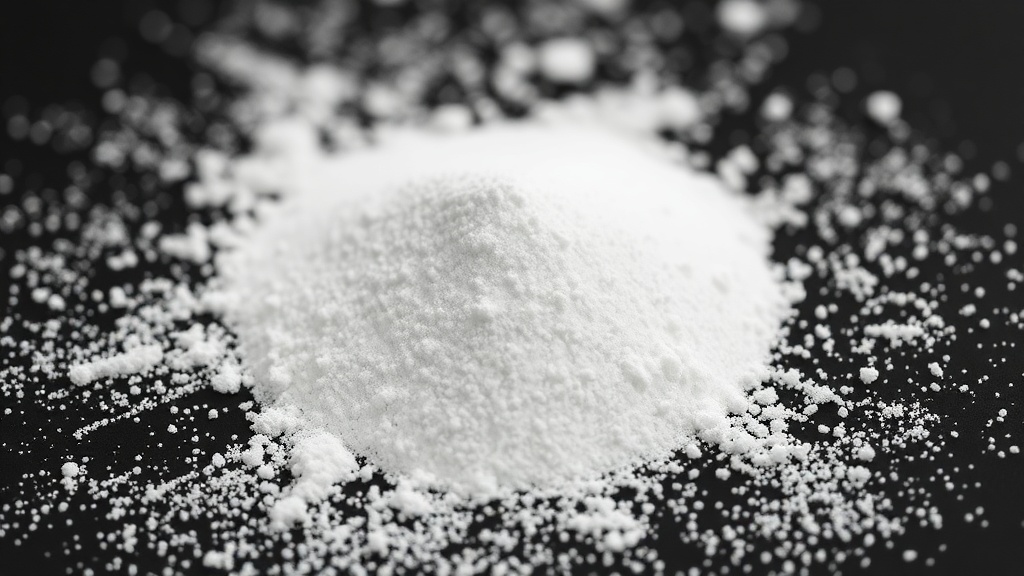
The EU PFAS universal restriction — covering more than 10,000 per- and polyfluoroalkyl substances including PTFE — is the most consequential reformulation event the lubricant industry has faced in a generation. For formulators still building around PTFE as a friction modifier or solid lubricant, the clock is running. PFAS-free lubricant additives are not a future consideration. They are a present procurement decision.
Why PTFE Is Now a Liability in Lubricant Formulations
ECHA’s 2023 universal restriction proposal places polytetrafluoroethylene (PTFE) squarely within PFAS scope under REACH Regulation (EC) No 1907/2006. PTFE decomposes above 260°C, releasing perfluorocarboxylic acids — persistent, bioaccumulative, and flagged under both REACH and the Stockholm Convention. Fire-resistant hydraulic fluids, high-temperature greases, food-grade lubricants, and marine lubricants formulated with PTFE face registration burden and eventual restriction. The question is not whether to reformulate — it is which PFAS-free alternative delivers equivalent or better performance.
hBN: The Highest-Performance PFAS-Free Solid Lubricant
Hexagonal boron nitride (hBN) is thermally stable above 900°C — a 650-degree advantage over PTFE. Its layered hexagonal structure provides boundary lubrication through the same lamellar shear mechanism, with coefficient of friction values in the 0.05–0.12 range at 1% loading in synthetic base oils. Unlike PTFE, hBN carries zero fluorine content, passes REACH Annex XVII screening, and qualifies for NSF HX1 food-grade certification in food processing machinery lubricants. Powderful Solutions supplies submicron hBN dispersions at 0.5–2% treat rates as a direct drop-in for PTFE in grease and oil formulations, with no process modification required.
WS2 and MoS2: PFAS-Free EP and Anti-Wear Performance
Tungsten disulfide (WS2) and molybdenum disulfide (MoS2) contain no fluorine, no restriction-listed substances, and are fully REACH-compliant as solid lubricant additives. WS2 outperforms MoS2 on oxidation resistance and thermal ceiling (above 400°C in air), making it the preferred choice for high-temperature or oxidative environments where MoS2 degrades. Torvix W720, a WS2-based EP additive from Powderful Solutions, achieves an 800 kgf weld point by ASTM D2596 at 2.5% loading — versus 10% required for standard MoS2 to reach equivalent performance. No PFAS. No REACH restriction risk.
EAL Biodegradable Lubricants: PFAS-Free Meets IMO MARPOL
Environmentally Acceptable Lubricants (EALs) under IMO MARPOL Annex V and the US EPA VGP 2013 must be biodegradable, minimally toxic, and non-bioaccumulative. PTFE fails two of these three criteria. Desilube’s Lubricore B250 and B260 are Group V synthetic ester base fluids that pass OECD 301B/D biodegradation testing and carry zero PFAS content — designed for sterndrive, thruster, and wire rope applications where seawater contact is unavoidable and EAL compliance is mandatory from 2026.
How to Reformulate Before the Restriction Lands
The ECHA PFAS restriction timeline points to a final decision in 2025–2026, with an 18-month transition period for existing formulations. That window is already open. The practical path: replace PTFE at 1–2% with an equivalent-particle-size hBN dispersion, run ASTM D2596 (weld point) and D2266 (wear scar) benchmarks to confirm EP and anti-wear parity, then resubmit safety data sheets under REACH Article 31. Powderful Solutions provides reference formulations, test data, and matched-particle-size hBN samples on request.
Ready to reformulate? Contact Powderful Solutions for hBN, WS2, or MoS2 sample packs with full ASTM performance data — or request Desilube NSF HX1 and EAL formulation guides at desilubeinc.com.
 Powderful Solutions Blog
Leave a comment