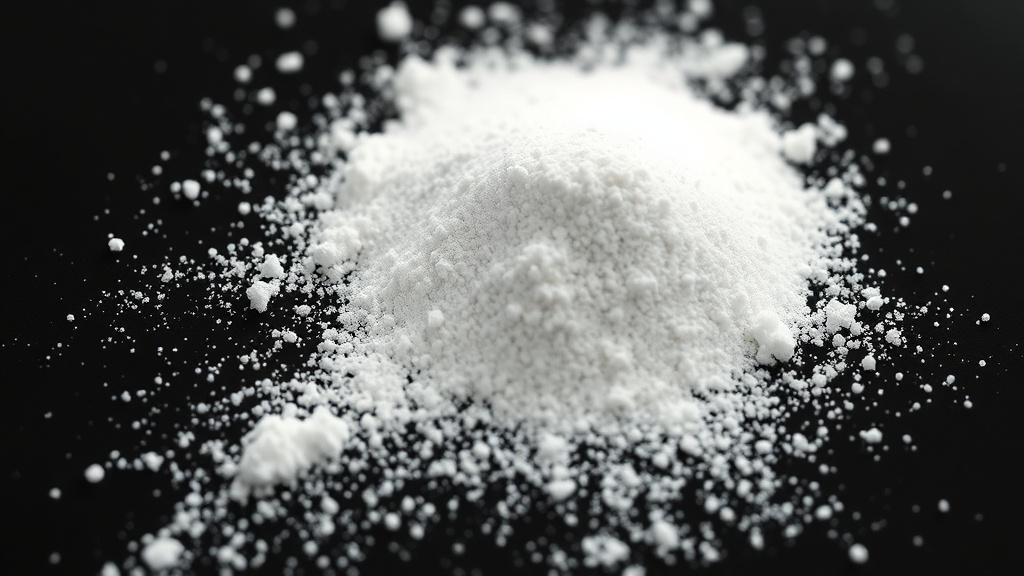
For decades, PTFE (polytetrafluoroethylene) was the default solid lubricant additive for lubricant and grease formulators worldwide. It worked. It was familiar. And until recently, there was not a compelling enough reason to change.
That is no longer true.
A combination of tightening PFAS regulations, thermal performance limitations, and the emergence of proven high-performance alternatives — specifically hexagonal boron nitride (hBN) — is driving a significant shift in how formulators specify solid lubricant additives.
The PFAS Regulatory Pressure
PTFE is a fluoropolymer that falls under the broad PFAS (per- and polyfluoroalkyl substances) regulatory category in several major jurisdictions. EU REACH restrictions and PFAS SVHC listings are creating real pressure on formulators to identify PFAS-free alternatives — not just for current compliance, but to get ahead of supply chain disruptions and growing customer requirements for sustainable lubricant formulations.
hBN contains no fluorine, no PFAS, and generates no toxic decomposition products. It is chemically inert, non-toxic, and REACH compliant. For formulators developing products for food processing, pharmaceutical machinery, or environmentally sensitive applications, this distinction is decisive.
Thermal Performance: hBN Has a Clear Advantage
PTFE begins to decompose at approximately 260°C, releasing toxic fluorocarbon gases above that threshold. For applications involving high-temperature bearings, automotive drivetrains, or industrial equipment operating near thermal limits, this is a genuine constraint on formulation design.
Hexagonal boron nitride is thermally stable above 900°C in oxidizing environments and above 1,400°C in inert atmospheres. This is not a marginal improvement — it is a fundamentally different thermal ceiling that opens up entire application categories that PTFE cannot serve.
Friction and Wear: ASTM Data
hBN layered hexagonal crystal structure creates a low-friction, self-lubricating interface comparable in mechanism to MoS₂ and graphite. In ASTM D4172 four-ball wear testing, Solidex™ B004 hBN powder at 1% treat rate in ISO VG 100 base oil reduces wear scar diameter from 0.70 mm to 0.30 mm and coefficient of friction from 0.10 to 0.05. This is directly competitive with PTFE-based additives at equivalent treat rates — with better thermal stability, no PFAS concerns, and no white residue contamination of test surfaces.
Thermal Conductivity: A Differentiator PTFE Cannot Match
hBN additions at 1% by weight approximately double thermal conductivity in lubricant formulations — from 0.12 to 0.24 W/m·K (ASTM E1952). This matters increasingly for EV drivetrain fluids, thermal interface greases, and electronics cooling applications where heat management is as critical as friction reduction. PTFE offers no meaningful thermal conductivity benefit in these applications.
Food-Grade and EAL Applications: The Desilube Advantage
hBN is non-toxic, tasteless, and chemically inert — properties that make it an excellent candidate for food-grade lubricant formulations requiring NSF HX1 certification. Powderful Solutions markets select hBN-based additives under the Desilube™ brand (desilubeinc.com) specifically for food processing, pharmaceutical, and environmentally acceptable lubricant (EAL) applications.
For marine, forestry, and agricultural applications where lubricant contact with water or soil is possible, Desilube™ hBN dispersions in Group V vegetable ester carriers meet OECD 301B/D biodegradability criteria while maintaining full EP/AW performance — a combination PTFE-based formulations cannot match.
Switching From PTFE to hBN: Practical Formulation Notes
- Dry powder direct replacement: Solidex™ B004 (1–3 µm) or B025 (25 µm) substitute directly for micronized PTFE powder in grease and paste formulations at comparable treat rates
- Pre-dispersed oil concentrate: Lubricore™ B230 (mineral oil carrier) and B250/B260 (Group V ester carriers) eliminate the need for high-shear milling and deliver consistent particle dispersion
- Treat rates: 0.5–3% by weight depending on application load and temperature severity; ASTM data sheets available for all standard treat rates
- Base oil compatibility: hBN is compatible with all base oil groups (I through V) and is chemically non-reactive with standard additive packages
Conclusion
The formulation case for hBN as a PTFE replacement is now strong across multiple dimensions simultaneously: PFAS regulatory compliance, thermal ceiling, friction and wear performance, thermal conductivity, and biodegradability. Formulators who make this transition are ahead of regulatory pressure and positioned to serve the application markets — food processing, high-temperature industrial, EV, and marine EAL — where PTFE simply cannot compete.
Powderful Solutions supplies Solidex™ hBN powders and Lubricore™ hBN dispersions to lubricant manufacturers worldwide. ASTM test data, technical data sheets, and sample quantities are available on request.
Contact our technical team: technical@pwsols.com | powderfulsolutions.com
 Powderful Solutions Blog
Leave a comment